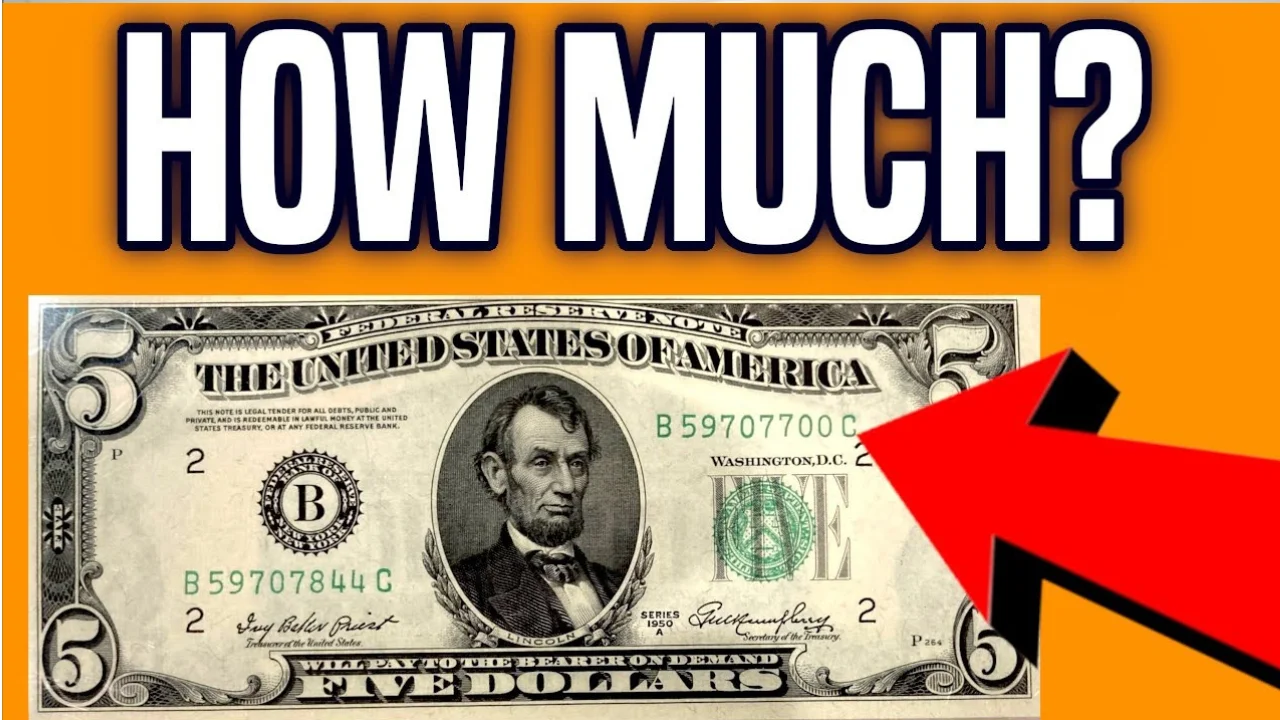
Check the Money in Your Pocket:Imagine this: you’re rummaging in your wallet, and an old five-dollar bill pops out. At first, it seems ordinary—Abraham Lincoln’s portrait, its familiar green color, and its traditional design. But then something catches your attention. The Treasury seal—the green circle on the right—appears to be upside down.
If so, you might have something worth far more than five dollars.
The 1995 five-dollar bill with the seal upside down is one of the most common printing mistakes among currency collectors. While it may seem like a minor error, this unique feature can turn an ordinary note into a small treasure. Here’s how to identify it, why it happened, and what to do if you find it in your pocket.
Why is The Upside-Down Seal so Special?
Printing errors are rare in U.S. currency—and that’s what makes them valuable. Each note undergoes a meticulous, multi-step printing process by the Bureau of Engraving and Printing (BEP).
A 1995 $5 note with an upside-down (reverse) Treasury seal is the result of a mechanical error during the third stage of printing, called the overprint stage. This is when the serial number, Treasury seal, and Federal Reserve seal are added to the already printed design.
Usually, the seals are placed perfectly straight. But if the pages of the notes are accidentally turned or rotated before the overprint, the seals will appear upside-down or in the wrong place. These error-prone notes are then cut out and put into circulation, usually by mistake—and once printed, they instantly become collectors’ favorites.
How to Identify a 1995 $5 Bill With an Upside-Down Seal
If you think you might have one, here’s what to look for:
-
The Year:
Check the small print on the bill for the Series 1995 marking. You’ll find this to the right of Lincoln’s portrait, near the bottom. -
The Seal:
Look at the green Treasury seal on the right side of the bill. On a normal note, it should be perfectly upright, aligned with Lincoln’s portrait. On an error bill, it will appear upside down — rotated 180 degrees. -
Serial Numbers:
The serial numbers should still be right-side-up. If the seal is inverted but the numbers are not, you’ve likely got a genuine printing error rather than damage or alteration. -
Condition Matters:
As with most collectibles, the better the condition, the higher the value. A crisp, uncirculated bill is far more valuable than one that’s worn, torn, or faded. -
Authentication:
Before getting too excited, it’s smart to have your bill checked by a professional currency grader or dealer. Experts can confirm whether the seal was truly misprinted during production and not manually altered later.
How much is it worth?
The price of a 1995 $5 note with a reverse seal can vary significantly depending on rarity and condition.
- Preowned condition: Around $100 to $250.
- Clean, uncirculated condition: Up to $500 or more.
- Exceptional examples (with excellent center and clear printing): Can sell for over $800 at auction.
Collectors love error notes because each note is unique—a snapshot of the exact moment when a slight error occurred in the printing process.
Where to Sell or Get an Appraisal
If you think you have one of these rare notes, you have a few options:
- Coin and currency shops: Local dealers often buy and appraise flawed notes.
- Online marketplaces: eBay and Heritage Auctions regularly feature listings of reverse-stamped notes.
- Professional grading services: Companies like PCGS Currency or PMG (Paper Money Guarantee) can officially authenticate and grade your note, increasing its credibility and resale value.
It’s best to have the note graded before selling – collectors are willing to pay more for notes that come with certification.
Tips for handling and Protecting your Bills
If you find a bill, don’t fold it or put it back in your wallet. Instead:
- Store it in a protective plastic cover designed for notes.
- Keep it away from sunlight and moisture.
- Avoid touching it too much, as the oils from your fingers can affect its quality over time.
Why this error still attracts attention today
Since 1995, currency printing technology has advanced dramatically, making such mistakes extremely rare today. For many collectors, the upside-down seal represents a fascinating piece of history—a human error that escaped layers of precision and quality control.
It’s a reminder that even in a world of machines and mass production, accidents can turn into treasures.
Final Thoughts
Next time you’re sorting through cash, take a closer look. This seemingly ordinary five-dollar note could be hiding an extraordinary secret.
If you see a 1995 series note with a green seal on the reverse, handle it carefully—you might be holding a precious gem worth hundreds of dollars.
So go ahead—check your wallet, your old drawers, and that “rainy day” money jar. Sometimes, the smallest things can lead to big surprises.